Strolling Through Time: Karlovy Vary’s Hidden Architectural Gems You Can’t Miss
Nestled in the heart of the Czech Republic, Karlovy Vary is more than just a spa town—it’s a living gallery of architectural wonders. From pastel-colored colonnades to baroque facades that whisper centuries of stories, every corner feels like a step back in time. I was stunned by how much character these buildings hold, blending history, art, and function in ways I never expected. The town’s thermal springs may draw visitors from around the world, but it is the elegance of its architecture that leaves a lasting impression. Understanding the design language of Karlovy Vary enhances not only your visual experience but also your emotional connection to this historic destination. This guide invites you to see the town through a new lens—one that reveals the craftsmanship, cultural influences, and thoughtful planning behind its most overlooked details.
Introduction: A Town Where Architecture Tells the Story
Karlovy Vary, known internationally as Carlsbad, has long been celebrated for its healing thermal springs, attracting European nobility, artists, and health seekers since the 14th century. But beyond its reputation as a wellness retreat lies a lesser-known treasure: an urban landscape shaped by centuries of architectural evolution. Each building, bridge, and colonnade reflects a moment in time, influenced by shifting artistic movements, technological advancements, and the practical demands of spa culture. Walking through the town is akin to flipping through the pages of a richly illustrated history book—one where every chapter is defined by form, proportion, and aesthetic intention.
What makes Karlovy Vary unique is how seamlessly its architecture supports both function and beauty. Unlike many historic towns preserved behind glass, this is a place where people still gather under colonnades to sip mineral water, where hotels once frequented by emperors now welcome modern travelers, and where the rhythm of daily life unfolds within a framework of ornate design. The buildings are not museum pieces frozen in time—they are active participants in the town’s identity.
For the thoughtful traveler, understanding these architectural layers transforms a simple visit into a deeper cultural experience. Recognizing a baroque gable or an art nouveau balcony isn’t just about naming styles—it’s about connecting with the values and aspirations of past generations. It’s about appreciating how light filters through a cast iron roof or how a staircase curves to guide the eye toward a river view. This article will guide you through the most significant yet often unnoticed architectural elements of Karlovy Vary, offering practical insights and visual highlights to enrich your journey.
The Iconic Colonnades: Shelter, Style, and Symbolism
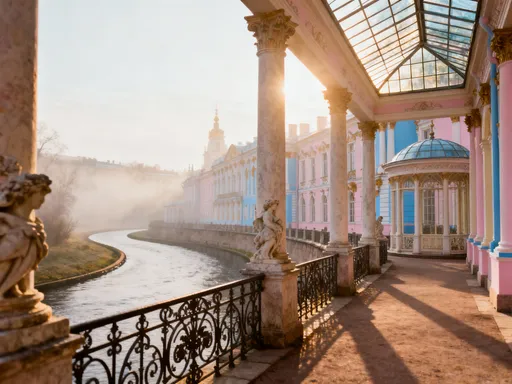
No image captures the essence of Karlovy Vary quite like its elegant colonnades—graceful arcades that stretch along the Teplá River, sheltering visitors from rain and sun while framing the town’s most famous feature: the hot springs. These structures are more than functional shelters; they are masterpieces of 19th-century design, blending engineering precision with artistic flair. Three stand out in particular: the Milan, Moser, and Tržní Colonnades, each with its own character and historical significance.
The Milan Colonnade, completed in 1881, is the largest and most photographed. Spanning nearly 150 meters, it features 124 intricately cast iron columns painted in soft green and white, supporting a glass roof that bathes the interior in natural light. The design, by architect Josef Zítek, combines neoclassical symmetry with industrial-age materials, creating a space that feels both grand and airy. At its center lies the Mill Spring, one of the most powerful thermal sources in the town, drawing crowds throughout the day. Yet, early in the morning, when the mist rises from the spring and the colonnade is nearly empty, the atmosphere becomes almost meditative—a moment of quiet beauty amidst the town’s usual bustle.
Just downstream, the Moser Colonnade offers a more intimate experience. Built in 1871 and later restored, it is named after the renowned Czech glassmaker Ludwig Moser, whose shop sits nearby. This structure is shorter and more delicate, with slender columns and a gently arched roof. Its design emphasizes transparency and flow, allowing unobstructed views of the river and surrounding hills. The Moser Colonnade shelters the Moser Spring, known for its slightly bitter taste and digestive benefits. Because it is less crowded than the Milan Colonnade, it’s an ideal spot to pause, sip water from a traditional porcelain cup, and observe the play of light on the ironwork.
Completing the trio is the Tržní Colonnade, the oldest of the three, dating back to the early 19th century. Though smaller and simpler in design, it holds historical importance as one of the first permanent structures built to protect visitors from the elements. Its recent restoration preserved original features while improving accessibility, making it both authentic and visitor-friendly. Together, these colonnades illustrate how architecture in Karlovy Vary evolved to serve both practical and symbolic roles—providing shelter, enhancing the spa experience, and expressing the town’s growing prestige.
For the best experience, visit the colonnades early in the morning, ideally between 7:00 and 8:30 a.m., when the light is soft and the crowds are thin. This is when the glass roofs shimmer with dew, and the sound of flowing water blends with the quiet footsteps of early risers. Bring a camera with a wide-angle lens to capture the full sweep of the arcades, and don’t forget to look up—many of the most beautiful details, such as floral motifs on column capitals and engraved dedications, are easy to miss at ground level.
Baroque and Neoclassical Elegance: Hotels and Historic Facades
As you move beyond the riverfront, Karlovy Vary reveals another layer of architectural richness: its historic hotels and townhouses, many of which date back to the 18th and 19th centuries. These buildings line the town’s main squares and winding streets, their facades adorned with stucco reliefs, pilasters, and wrought-iron balconies that speak to a time when elegance and symmetry were marks of refinement. The predominant styles—baroque and neoclassical—reflect the tastes of the Austro-Hungarian elite who once flocked here for rest and recreation.
Baroque architecture in Karlovy Vary is characterized by dramatic ornamentation, curved forms, and a sense of movement. Look closely at buildings around Mírové Náměstí (Peace Square), and you’ll notice elaborate window surrounds, sculpted cartouches, and facades that seem to ripple with energy. One striking example is the Grandhotel Pupp, a landmark that has hosted emperors, composers, and film stars. While the current structure is largely 19th-century neoclassical, it incorporates baroque-inspired elements in its grand entrance and rooftop sculptures. The hotel’s symmetrical layout and central pediment convey stability and grandeur, fitting for a building meant to impress.
Neoclassical design, which gained popularity in the late 18th century, emphasizes balance, proportion, and references to ancient Greek and Roman architecture. In Karlovy Vary, this style is evident in the clean lines, rectangular windows, and restrained ornamentation of many spa hotels. Buildings along Skleněná Street and Ferdinandova Třída exemplify this aesthetic, with their pale facades, columned porticos, and decorative cornices. Unlike the exuberance of baroque, neoclassical architecture conveys order and rationality—qualities that aligned well with the scientific approach to hydrotherapy that emerged during the Enlightenment.
Walking through these streets offers more than visual pleasure; it provides insight into the social history of the town. The concentration of grand hotels near the springs underscores how central wellness was to Karlovy Vary’s identity. Each hotel was designed not just for comfort but as a statement of status, with spacious promenades, lounges, and terraces that encouraged social interaction. Today, many of these buildings still operate as luxury accommodations, preserving their historic charm while offering modern amenities.
To fully appreciate these facades, take a slow walking tour through the town center, ideally with a local map that marks the construction dates of key buildings. Pay attention to details like door knockers, window grilles, and roofline sculptures—elements that reveal the craftsmanship of a bygone era. Consider visiting in the late afternoon, when the sun casts long shadows across the facades, highlighting textures and reliefs that are less visible in flat daylight.
Art Nouveau Whispers: Where Nature Meets Design
Amid the dominance of baroque and neoclassical styles, Karlovy Vary also harbors subtle traces of Art Nouveau—a design movement that flourished in Europe at the turn of the 20th century. Though not as widespread as in cities like Prague or Vienna, Art Nouveau appears in unexpected corners of the town, adding a touch of organic elegance to the urban fabric. This style, known for its flowing lines, floral motifs, and integration of art into everyday life, found a natural home in Karlovy Vary, where the surrounding forests and river valleys already evoke a sense of harmony with nature.
One of the most distinctive Art Nouveau features in the town is its decorative ironwork. Look closely at balcony railings, gateways, and lamp posts, and you’ll find swirling patterns that resemble vines, flowers, and even water currents. These designs were not merely ornamental; they reflected a philosophical shift in architecture—one that sought to blur the boundaries between the built environment and the natural world. A prime example can be found in some of the townhouses along Jáchymova Street, where door frames curve like stems and stained glass windows depict stylized peacocks and lilies.
Art Nouveau’s presence in Karlovy Vary is also evident in certain interior spaces, particularly in historic cafés and smaller hotels that have retained original features. Mosaic floors, curved wooden banisters, and ceiling paintings with mythological themes are all hallmarks of the style. While many of these interiors are not publicly accessible, guided tours or cultural events occasionally offer a glimpse inside. Checking with the local tourist information center for open-house days or heritage weekends can yield rewarding discoveries.
What makes Art Nouveau stand out in this context is its contrast with the more rigid classical styles that dominate the town. While baroque and neoclassical architecture emphasize order and symmetry, Art Nouveau introduces fluidity and emotion. It invites the observer to look closer, to trace the path of a carved tendril or follow the gaze of a painted nymph. In a town shaped by scientific wellness and structured promenades, these moments of artistic whimsy offer a refreshing counterpoint.
For travelers interested in this style, a dedicated walk through the quieter residential streets—away from the main tourist thoroughfares—can yield surprising finds. Bring a notebook or use a smartphone to sketch or photograph details that catch your eye. Even small elements, like a doorknob shaped like a sunflower or a stained glass transom with flowing hair motifs, can serve as entry points into a deeper appreciation of the era’s design philosophy.
The Role of Thermal Springs in Shaping Urban Layout
At the heart of Karlovy Vary’s architectural identity lies a powerful natural force: the thermal springs. With over a dozen major springs and dozens more minor ones, the town’s entire layout has been shaped by the need to access, display, and celebrate these geothermal resources. Unlike planned cities built on grids, Karlovy Vary grew organically, its streets and buildings adapting to the locations of hot water sources. This resulted in a winding, almost labyrinthine urban pattern that encourages exploration and rewards curiosity.
Architects and city planners had to work around the springs rather than impose rigid designs upon them. As a result, colonnades were built directly over spring outlets, hotels were constructed adjacent to the most popular sources, and walkways were elevated or curved to accommodate steam vents. The famous pedestrian bridge, Královský Most (Royal Bridge), not only connects two sides of the river but also aligns with key springs, creating a symbolic and practical link between different parts of the spa district.
This functional influence extended to aesthetics as well. Elevated walkways, for instance, were designed not just for safety but to allow steam to rise dramatically, creating a mystical atmosphere that enhanced the visitor experience. At sunrise, when the air is cool and the thermal vapors rise in thick plumes, the town takes on an almost dreamlike quality—proof that practical engineering can also produce poetic effects.
The placement of the springs also determined the social geography of the town. The most powerful and mineral-rich sources, such as the Vřídlo (Geyser Spring), became central gathering points, surrounded by grand colonnades and luxury hotels. Less prominent springs were integrated into residential areas or smaller public spaces, serving local needs. This hierarchy of springs is mirrored in the architecture, with more elaborate designs reserved for the most celebrated sources.
Understanding this relationship between nature and design allows visitors to see Karlovy Vary not as a static museum but as a living system—a town where geology, health, and beauty converge. The next time you pause to drink from a spring, take a moment to observe how the surrounding structure enhances the experience: the way the roof frames the sky, how the columns guide your movement, or how the materials reflect the light. These are not accidents of design but intentional choices shaped by centuries of tradition.
Practical Tips for Spotting Architectural Details Like a Pro
To truly appreciate Karlovy Vary’s architectural depth, it helps to adopt the habits of an observant traveler. While the major landmarks are easy to find, the most rewarding discoveries often lie in the details—the carved keystone above a doorway, the pattern on a floor tile, or the way sunlight filters through a stained glass window. With a few simple strategies, you can transform your visit from a casual stroll into a focused exploration of design.
First, consider bringing binoculars or using the zoom function on your camera or smartphone. Many of the most intricate reliefs and sculptures are located high on facades, rooftops, or under eaves, making them difficult to see from street level. A close-up view can reveal faces in grotesques, floral patterns in ironwork, or inscriptions in Latin or old Czech script. This is especially useful when examining the upper levels of historic hotels or the decorative cornices along main streets.
Second, time your visits to take advantage of natural light. Early morning and late afternoon offer the best conditions for photography and visual clarity. The low angle of the sun creates shadows that accentuate textures and three-dimensional details, making carvings and moldings stand out. Midday light, while bright, tends to flatten surfaces and wash out colors, so it’s best reserved for indoor visits or shaded areas like colonnades.
Third, use a detailed architectural map or guidebook. The Karlovy Vary tourist office offers maps that mark the locations and construction dates of key buildings, helping you trace the evolution of styles across different neighborhoods. Some apps and audio guides also provide narrated walking tours focused on design history, offering context that enhances your understanding. Pairing a self-guided walk with a short visit to the Moser Museum or the Jan Becher Museum can deepen your appreciation, as these sites often include exhibits on local craftsmanship and materials.
Fourth, slow down. Instead of rushing from one spring to the next, dedicate at least one morning or afternoon to a single district, such as the area around Mírové Náměstí or the stretch between the Mill and Moser Colonnades. Walk at a leisurely pace, stop frequently, and look in all directions—not just ahead, but up, down, and behind you. Some of the most charming details, like a mosaic step or a hidden courtyard, are easy to miss if you’re not paying attention.
Finally, avoid peak hours if possible. Between 11 a.m. and 3 p.m., the main colonnades and squares can become crowded, making it difficult to study architecture without obstruction. Early mornings or late evenings not only offer better lighting but also a quieter atmosphere, allowing you to focus on details without distraction. If you’re visiting in summer, consider a weekday visit, as weekends tend to draw larger crowds.
Conclusion: Seeing Karlovy Vary Through an Architect’s Eyes
Karlovy Vary is more than a destination for wellness—it is a living testament to the power of thoughtful design. Every colonnade, facade, and staircase tells a story of how people have shaped their environment to honor nature, celebrate beauty, and support well-being. By learning to see the town through an architect’s eyes, you gain access to a deeper layer of meaning, one that transforms a simple walk into a journey through time.
The true magic of Karlovy Vary lies not just in its famous springs or grand hotels, but in the quiet details: the curve of a wrought-iron railing, the way light dances through a glass roof, or the centuries-old stonework that still bears the marks of its makers. These elements, often overlooked, are what give the town its soul. They remind us that architecture is not just about shelter or style—it is about creating spaces that inspire, comfort, and endure.
As you plan your visit, consider approaching Karlovy Vary not just as a spa getaway, but as a cultural experience. Allow yourself the time to wander slowly, to look closely, and to appreciate the craftsmanship that surrounds you. Bring curiosity, a sense of wonder, and a willingness to see beyond the surface. In doing so, you’ll discover that Karlovy Vary is not merely a place on a map—it is a story written in stone, iron, and glass, waiting to be read by those who take the time to look.