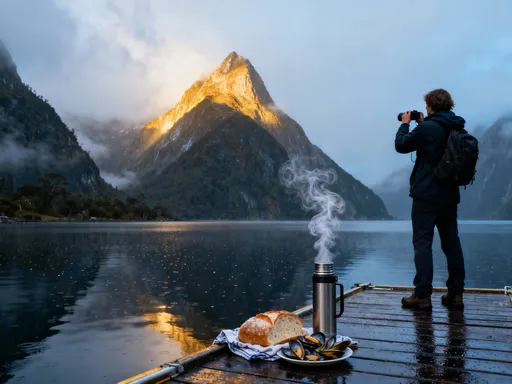
You Won’t Believe These Hidden Photo Spots in Milford Sound—And the Food? Absolute Magic
Milford Sound isn’t just mountains and waterfalls—it’s a full sensory journey. I went expecting epic views, and yes, the photo spots are mind-blowing. But what truly surprised me? The rich food culture hidden in plain sight. From lakeside picnics with local flavors to freshly caught seafood that tastes like the wild, every bite tells a story. This isn’t just a trip for your camera—it’s a feast for your soul. Let me show you why.
Arrival: First Impressions of Milford Sound
The journey into Milford Sound is an experience in itself, a slow unveiling of one of nature’s most dramatic masterpieces. Whether arriving by small plane that glides low over emerald valleys, boarding a ferry from Te Anau, or driving the winding Milford Road through the legendary Homer Tunnel, each approach builds anticipation. The final emergence from the tunnel feels like stepping into another world—where sheer rock walls rise thousands of feet, waterfalls streak down moss-covered cliffs, and the air hums with quiet grandeur. This isn’t just scenery; it’s a living landscape that demands presence.
As the road descends toward the fiord, travelers are greeted by the first of many iconic vantage points. Stirling Point, marked by its famous signpost with directions to global cities, is more than a photo op—it’s a symbolic threshold. Here, the scale of the journey becomes real. Facing south toward the Tasman Sea, with the Darran Mountains looming behind, it’s easy to feel both small and deeply connected. Early morning arrivals are rewarded with soft, golden light that bathes the wharf and reflects perfectly in the still waters of the marina. This is where most scenic cruises begin, and the departure docks offer unobstructed views of Mitre Peak’s mirrored silhouette—ideal for capturing the first true image of Milford’s majesty.
Sound travels differently here. The absence of city noise allows the natural world to speak clearly—the distant crash of a waterfall, the cry of a kea circling above, the gentle lap of waves against wooden pilings. These moments, often overlooked in the rush to photograph, are part of what makes Milford so unforgettable. The initial impression isn’t just visual; it’s auditory, tactile, emotional. Visitors frequently pause, cameras lowered, simply absorbing the stillness. That stillness, in turn, sharpens the senses, preparing one for the deeper discoveries to come.
Iconic Photo Spots You Can’t Miss
No visit to Milford Sound is complete without capturing its most celebrated landmarks—each one a postcard brought to life. Mitre Peak, standing sentinel at 1,692 meters, is perhaps the most photographed mountain in New Zealand. Its near-symmetrical pyramid shape rises directly from the water, creating a reflection so sharp on calm days that it’s hard to tell where the rock ends and the mirror begins. The best time to photograph it is during golden hour, just after sunrise or before sunset, when the low-angle light warms the granite face and casts long shadows across the fiord. From the deck of a cruise or a kayak floating silently in the center channel, the view is nothing short of transcendent.
Bowen Falls, plunging 162 meters from a hanging valley into the waters near the cruise terminal, is another must-capture scene. Unlike distant peaks, this waterfall feels immediate and powerful. Spray often catches the light, creating fleeting rainbows, while the surrounding rainforest glows in lush greens. For photographers, the challenge and joy lie in balancing exposure—capturing the white rush of water without losing detail in the darker forest edges. A slight mist in the air enhances the atmosphere, softening edges and adding depth. Tripods are often unnecessary due to the brightness of the falling water, but a polarizing filter can help reduce glare and bring out the texture of wet rock.
The dramatic cliffs visible from a scenic cruise or sea kayak offer endless framing opportunities. As vessels glide deeper into the fiord, the walls seem to close in, creating a sense of awe and intimacy. Seals often bask on rocky outcrops, adding life to wide-angle shots. The interplay of light and shadow changes constantly, especially as clouds drift across the sky. Photographers who stay alert will catch those fleeting moments when a beam of sunlight breaks through, illuminating a single waterfall or highlighting a patch of fern-covered cliff. These are not static scenes—they are dynamic, shifting performances of nature, best appreciated with patience and an open eye.
Off-the-Beaten-Path Vistas Only Locals Know
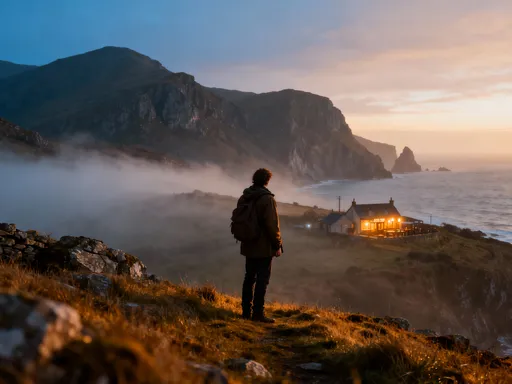
Beyond the well-trodden paths and cruise routes lie hidden corners of Milford Sound that offer solitude and a more personal connection to the landscape. These are the places where the noise of tourism fades, replaced by the whisper of wind through rimu trees and the quiet rhythm of the tides. One such spot is a secluded stretch of shoreline near the northern edge of the Piopiotahi Marine Reserve, accessible via a short detour from the main walking trail toward the kayaking launch point. Here, the water is calm, the reflections pristine, and the chance of encountering another visitor is slim. It’s an ideal place to sit, breathe, and compose a photograph without distraction.
Another lesser-known vantage is found along a narrow forest clearing just off the track leading to the freshwater swimming hole near the lodge. A few steps off the main path reveal an elevated outlook where the entire fiord unfolds below, framed by native beech and ferns. This perspective, rarely seen in travel brochures, offers a layered composition—foreground foliage, mid-ground water, and distant peaks vanishing into mist. Because it’s not marked or promoted, few tourists find it, making it a quiet reward for those willing to explore with curiosity and respect.
Local guides often speak of ‘listening to the land’—a Māori concept that encourages slowing down and observing with intention. This mindset leads to discoveries that no map can show. A rain-soaked log becomes a natural tripod rest. A break in the clouds signals the perfect moment for a long exposure shot of a hidden cascade. These offbeat locations aren’t about grandeur alone; they’re about intimacy. They invite the photographer to engage, not just document. And in doing so, they create images that feel authentic, personal, and deeply rooted in place.
The Role of Weather in Capturing the Fiord’s Soul
One of the most misunderstood aspects of photographing Milford Sound is the weather. With an average of 180 rainy days per year, many visitors arrive braced for disappointment. But those who embrace the rain often leave with the most powerful images. Rain isn’t an enemy here—it’s a collaborator. It deepens the greens of the rainforest, turns every rock face into a canvas for temporary waterfalls, and wraps the peaks in swirling mist that evokes mystery and timelessness. A light drizzle can transform an ordinary scene into something ethereal, where light diffuses softly and colors become saturated and rich.
Fog, often seen as a photographic obstacle, is in fact one of Milford’s greatest assets. It simplifies compositions, stripping away clutter and focusing attention on shape, texture, and mood. A single peak emerging from the clouds can feel like a revelation. Long exposures in low light capture the movement of water and mist, creating dreamlike images that feel more emotional than literal. Even on overcast days, the absence of harsh shadows allows for balanced exposures across wide scenes—a benefit many photographers learn to appreciate.
Personal experience has taught me that some of my most compelling shots were taken when others packed up their gear. Standing on the deck of a cruise ship during a steady downpour, wrapped in a raincoat with a lens hood shielding the front element, I watched as hundreds of new waterfalls appeared on the cliffs—ephemeral ribbons of white that lasted only as long as the rain. These ‘temporary falls’ are a signature of Milford and rarely seen in dry conditions. They are best captured with a medium telephoto lens, isolating sections of the cliff face to emphasize texture and motion. The lesson is clear: don’t fear bad weather. In Milford Sound, it often brings out the soul of the place.
Tasting the Wild: Food Culture in a Remote Paradise
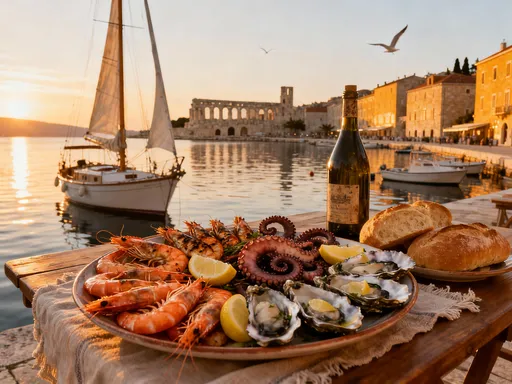
Just as the landscape of Milford Sound is shaped by isolation and abundance, so too is its food culture. With no large supermarkets or chain restaurants, dining here is inherently local, seasonal, and deeply connected to the environment. Meals served on scenic cruises often feature ingredients sourced from the surrounding waters and forests—green-lipped mussels farmed in the fiord, wild-caught Bluff oysters, and whitefish like ling or cod, prized for their delicate flavor. These are not fancy dishes with elaborate presentations, but simple, honest food that tastes of the sea and the soil.
One of the most memorable experiences is enjoying a warm lunch aboard a midday cruise. A bowl of creamy seafood chowder, made with locally caught fish and a hint of native horopito spice, served with crusty bread—this is comfort elevated by context. Eating while floating between towering cliffs, with rain tapping on the windows and seals bobbing alongside the boat, transforms a meal into a multisensory event. The flavors feel richer, the warmth more welcome, the moment more profound. It’s not just about sustenance; it’s about connection.
Even small offerings carry meaning. At the visitor center, travelers can find homemade bush pies—filled with wild venison, lamb, or even sweet berries foraged from nearby clearings. These portable treats, often baked by local families, are sold in modest wooden stalls and wrapped in recyclable paper. A berry compote made from tātahi (mountain pepperberry) or kākābeak flowers adds a tangy, slightly spicy note that lingers on the palate. These are not mass-produced snacks; they are expressions of place, made by people who live in harmony with the land. To eat them while gazing out at the fiord is to taste the spirit of Milford itself.
How to Eat Like a Local—Even as a Visitor
While there are no restaurants in the traditional sense within Milford Sound, there are thoughtful ways to experience the region’s food culture authentically. One of the most rewarding is packing a picnic with ingredients sourced from Te Anau or nearby towns. A thermos of hot soup or cocoa, sandwiches made with locally baked bread, and a slice of honey cake from a roadside stall can become the centerpiece of a quiet lunch at a scenic overlook. Choosing a spot like the viewing platform near the hydroelectric station or a quiet bench by the water’s edge allows for a meal that feels both nourishing and ceremonial.
Supporting small kiosks and community-run food stands is another way to eat like a local. These vendors often use family recipes passed down through generations, incorporating native plants and sustainable practices. Purchasing a pie or a cup of tea from such a stand isn’t just a transaction—it’s a gesture of respect and reciprocity. Many of these operations are run by Māori families who view kai (food) as a taonga (treasure) to be shared with care. Understanding this cultural context deepens the experience, turning a simple snack into a moment of connection.
There’s also a quiet luxury in simplicity here. A thermos of hot cocoa, sipped while watching the mist rise off the water at dawn, can feel more indulgent than any five-star meal. The cold air, the stillness, the vastness of the surroundings—all of it enhances the pleasure of warmth and flavor. Travelers who slow down, who choose to eat mindfully and in harmony with the landscape, often find that their memories are not just visual, but gustatory. They remember the crunch of a fresh apple eaten on a dock, the saltiness of smoked fish shared with fellow travelers, the sweetness of a berry tart warmed by the sun. These are the tastes that stay with you long after the journey ends.
Bringing It All Together: A Journey for the Senses
Milford Sound is not a place to be seen only through a lens. It is a place to be felt, heard, smelled, and tasted. The most powerful memories are not just the photographs we take, but the moments we inhabit—the warmth of a cup in cold hands, the sound of rain on a boat roof, the sight of a waterfall appearing out of nowhere. Photography captures a fraction of a second, but food grounds us in the fullness of time. Together, they create a deeper, more enduring connection to this wild and beautiful place.
Travelers often arrive with cameras charged and itineraries planned, eager to capture the iconic views. But the true magic of Milford reveals itself to those who linger, who allow themselves to be surprised. It’s in the unexpected conversation with a local baker, the decision to eat lunch in the rain, the choice to put the camera down and simply watch the light shift on the water. These are the moments that transform a trip into a pilgrimage—a journey not just across geography, but within the self.
So when you visit Milford Sound, let yourself be fully present. Seek out the hidden photo spots, yes, but also savor the simple meal, the shared warmth, the quiet joy of being exactly where you are. Let the rain soak your jacket, let the wind tug at your hair, let the taste of wild berries linger on your tongue. This is not just a destination for your camera. It is a feast for your soul. And in its quiet, powerful way, it will stay with you—seen, felt, and tasted—long after you’ve left its shores.